The Davos Thaw: Elon Musk Makes Historic Debut with a Vision of Robot Dominance
Jan 24, 2026 |
👀 133 views |
💬 0 comments
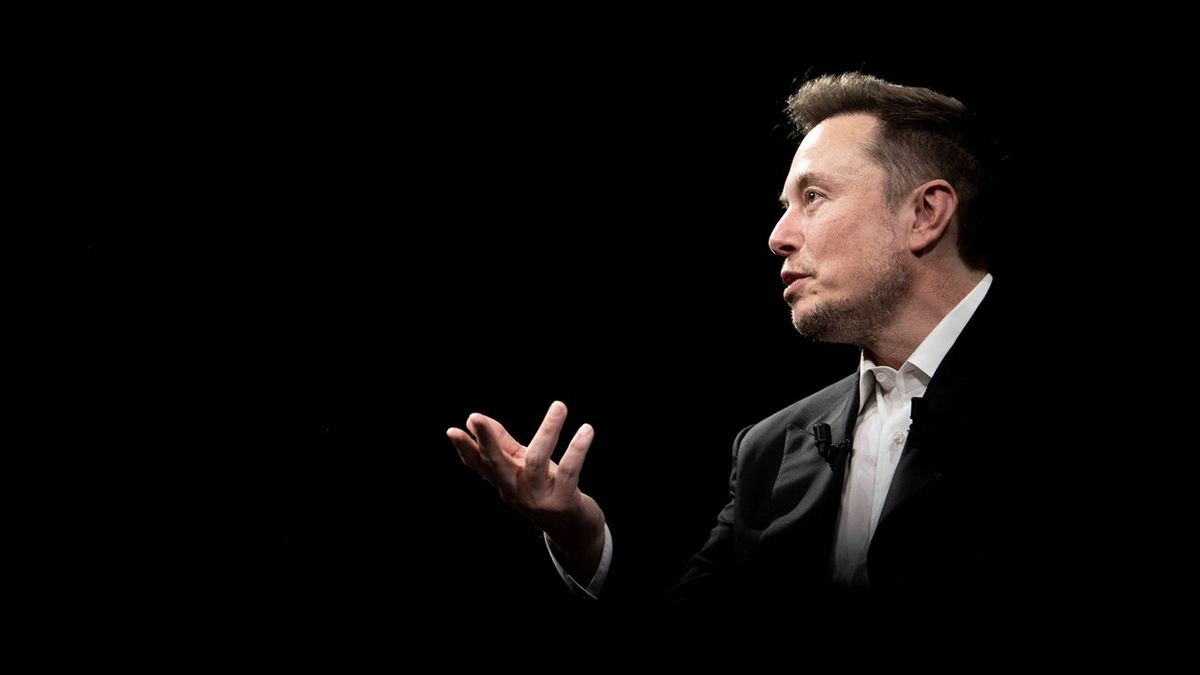
In a moment that defined the 2026 World Economic Forum (WEF), Elon Musk made his first-ever appearance at the alpine summit on January 22, 2026. After years of dismissing the event as "boring" and "elitist," the Tesla and SpaceX CEO took the stage for a headline-grabbing fireside chat with BlackRock CEO Larry Fink.
Musk’s presence signaled a pragmatic recalibration of his relationship with global leaders, using the platform to outline a future where the human-to-robot ratio flips and AI intelligence reaches the "singularity" much sooner than previously forecast.
1. The "1-to-1" Ratio: Robots Will Outnumber Humans
Musk’s most striking prediction was that humanoid robots will eventually become more numerous than people. He argued that as the cost of hardware drops and AI "brains" become more generalized, the demand for robotic labor will be virtually infinite.
Tesla Optimus Timeline: Musk revealed that Optimus units are already performing autonomous industrial tasks in Tesla factories. He set a target for public sales as early as late 2027, following a year of "complex task" testing in 2026.
The Household Utility: He pitched the humanoid robot as a domestic staple, asking the audience, "Who wouldn’t want a robot to watch over your kids or take care of your pets?"
Economic "Abundance": Musk posited that ubiquitous robotics would trigger an economic expansion "beyond all precedent," effectively ending poverty by decoupling productivity from human labor.
2. The AI Intelligence Countdown
Musk provided a specific—and aggressive—roadmap for the evolution of Artificial General Intelligence (AGI).
Individual Superiority (2026): Musk predicted that AI will be "smarter than any individual human" by the end of this year or, at the very latest, 2027.
Collective Superiority (2030-2031): He went further, stating that by the beginning of the next decade, AI will likely surpass the collective intelligence of all humans combined.
The Truth Mandate: To avoid a "Terminator" scenario (a reference he made several times during the talk), he emphasized that his AI venture, xAI, is designed to be "maximally truth-seeking" to ensure it remains aligned with human interests.
3. Solving the Energy "Gating Factor"
A recurring theme in Musk’s Davos appearance was that the bottleneck for this AI revolution is no longer software or chips—it is electricity.
The Power Gap: He warned that AI chips are currently being produced faster than the infrastructure can power them.
Orbital Solutions: In a characteristic SpaceX pivot, Musk suggested that the lowest-cost place to run large-scale AI systems might eventually be space. He proposed launching solar-powered AI satellites that utilize the cold vacuum of space for natural cooling and constant solar energy for compute.
Solar Dominance: He doubled down on his belief that a relatively small corner of the U.S. desert covered in solar panels could power the entire country, urging a faster shift toward sustainable infrastructure.
Key Quote: "If you have ubiquitous AI that is essentially free, and ubiquitous robotics, then you have a future of total abundance where goods and services are available to everyone. The only limit will be our imagination."
4. Expansion into Autonomous Mobility
Musk also used the summit to update global leaders on Tesla's shift toward an AI services model.
Robotaxi Rollout: He predicted that Tesla’s dedicated Cybercab and "unsupervised" Robotaxi service would be operational in several U.S. cities by the end of 2026.
Global Expansion: He noted that Tesla is currently seeking regulatory approval for "Supervised Full Self-Driving" in Europe and China, with hopes to receive the green light as early as February 2026.
🧠 Related Posts
💬 Leave a Comment