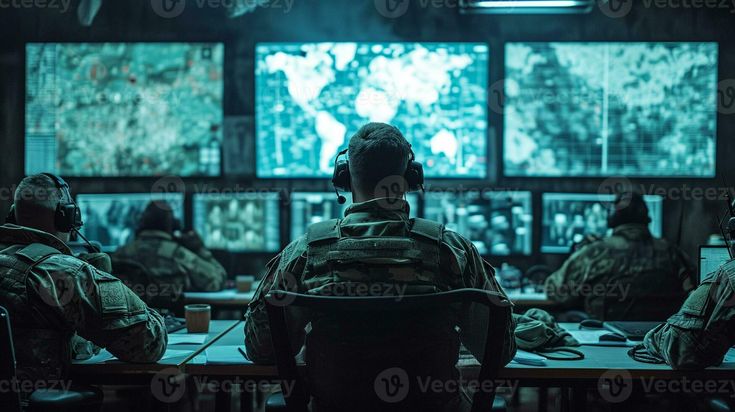
The Algorithm War: AI-Driven Targeting in Operation Epic Fury and the Rise of Kinetic Cyber
Mar 14, 2026 |
👀 188 views |
💬 0 comments
As "Operation Epic Fury"—the joint U.S.-Israeli campaign against Iranian military infrastructure—enters its third week, the nature of warfare has fundamentally shifted. For the first time, Artificial Intelligence is not just an auxiliary tool for analysts; it is the primary engine driving the "kill chain." However, a new phase of the conflict has emerged: the very data centers and cloud architectures housing these "digital generals" have themselves become high-priority targets for kinetic and cyber strikes.1. The AI Targeting Machine: "Maven" and "Claude"The speed of the current campaign is unprecedented. U.S. Central Command (CENTCOM) confirmed this week that more than 5,500 targets were identified and struck in the first 11 days of the war—a tempo that would have been physically impossible for human intelligence teams alone.The Maven Smart System: Developed by Palantir and now the backbone of U.S. targeting, Maven ingests millions of data points from satellites, signals intelligence (SIGINT), and drone feeds.The Claude Integration: In a controversial move, the U.S. military embedded Anthropic’s Claude AI into the Maven system. Claude acts as the "reasoning layer," summarizing field intelligence and drafting target prioritization lists in seconds.The Lavender & Gospel Systems: Israeli forces are utilizing their own specialized AI: The Gospel (Habsora) for rapid structural targeting and Lavender, an AI database that has reportedly identified thousands of individuals for elimination based on pattern-matching behavioral data.2. The Target Becomes the Target: Striking the "Brains"The most significant development in March 2026 is the realization that "Physical AI" is only as strong as its hardware. Iran and its proxies have pivoted their strategy to target the infrastructure that makes AI-led warfare possible.Drone Strikes on Data Centers: Iranian-linked drones have reportedly conducted precision strikes on commercial data centers in the UAE and Bahrain. These facilities host the hyperscale cloud services that power Western military communication and AI processing.The "Targeting the Targeters" Doctrine: Pro-Iranian hacker groups, such as Z-Pentest, have openly posted plans to "take out the brains." They are targeting the power grids and cooling systems of major AI hubs, recognizing that a localized blackout can effectively "blind" the AI's ability to process real-time battlefield data.Supply Chain Sabotage: Cyberattacks have intensified against U.S. defense contractors and medical technology firms (like the recent disruption at Stryker), aimed at slowing the logistics and recovery capabilities that the AI targeting systems rely on to maintain momentum.3. The Human Toll: Automation Bias and the "20-Second Verification"The reliance on AI has brought "automation bias" to the forefront of the humanitarian debate. Reports from the field suggest that human operators are often spending as little as 20 seconds verifying an AI-generated target before authorizing a strike.The Minab Tragedy: A Tomahawk strike on a primary school in Minab, Iran, which killed 165 people, is being cited as a potential "hallucination" error. Experts believe the AI may have misidentified the building as a military barracks based on outdated satellite imagery or faulty logic.The Accountability Gap: While commanders maintain that "humans are always in the loop," critics argue that the sheer speed of AI-generated targeting turns human oversight into a "mere formality" or a "rubber stamp."4. Kinetic Cyber: A New FrontThe conflict has popularized the term "Kinetic Cyber"—digital operations designed to trigger immediate physical consequences.Counter-AI Cyberwar: The U.S. and Israel have used coordinated cyber and space effects to "scramble" Iranian sensor networks, essentially feeding the Iranian military "ghost data" to confuse their own nascent AI defense systems.Psychological Operations: In the opening hours of the war, a breach of the BadeSaba religious app (used by 5 million Iranians) allowed the delivery of targeted anti-regime messages directly to users' phones—an example of AI-tailored information warfare.Analyst Perspective: "We have moved from 'cyber-assisted' war to 'AI-dependent' war. The vulnerability is no longer just the tank or the jet; it is the fiber-optic cable and the server rack. If you can poison the data or melt the processor, you can win the war without firing a single bullet at the front line." — Noah Sylvia, RUSI Think Tank
🧠 Related Posts
💬 Leave a Comment