Raising Lobsters: OpenClaw Ignites a New AI Super-Cycle in China
Mar 18, 2026 |
👀 176 views |
💬 0 comments
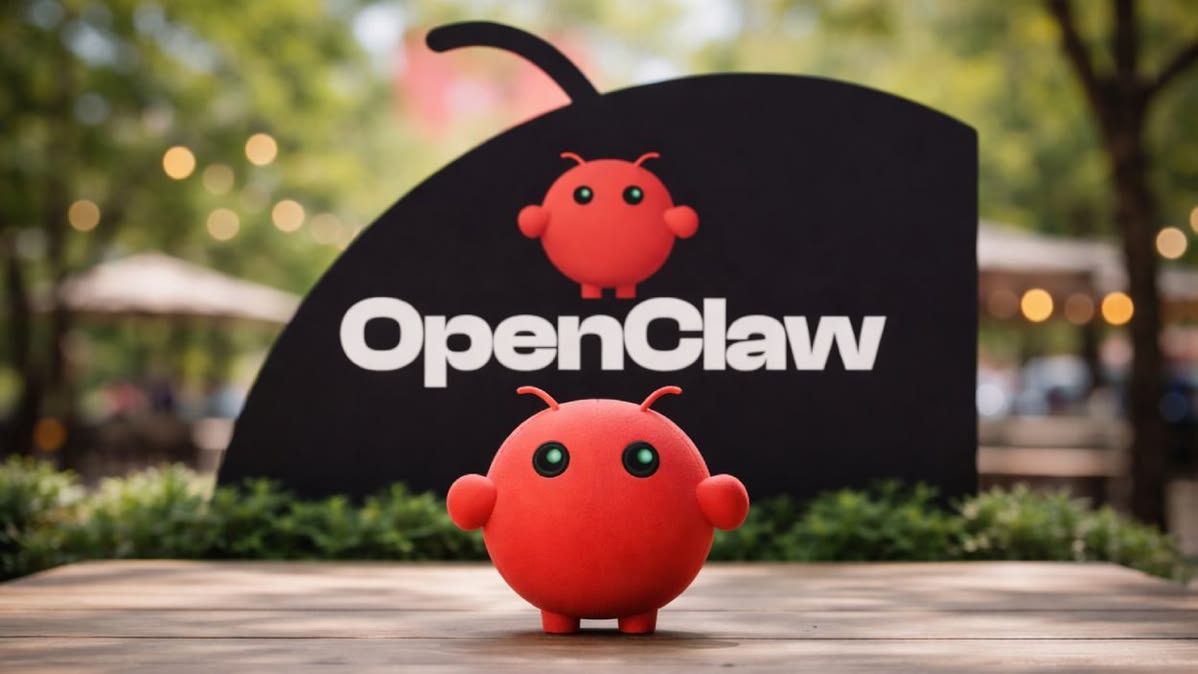
The Chinese stock market is currently witnessing a massive "AI agent" frenzy, triggered by the viral adoption of OpenClaw, an open-source autonomous agent framework. What began as a niche developer tool has exploded into a national phenomenon dubbed "Raising Lobsters" (yang longxia), a reference to the project’s red crustacean logo.
The frenzy reached a fever pitch today following bullish remarks from Nvidia CEO Jensen Huang, who described OpenClaw as "definitely the next ChatGPT" and a "foundational shift" in how humans interact with technology.
1. The Market Rally: The "OpenClaw Surge"
Shares of Chinese AI firms saw double-digit gains on Wednesday as investors scrambled to identify the leaders of the new "Agentic Era."
MiniMax Group: Jumped 20% in Hong Kong to reach a fresh record high.
Knowledge Atlas (Zhipu AI): Climbed nearly 20% following the launch of its GLM-5-Turbo, the first large language model specifically optimized for OpenClaw workflows.
UCloud Technology: Gained 13.2% in Shanghai as the primary cloud provider for many local OpenClaw deployments.
Baidu (BIDU): Rose significantly after unveiling its "Family of Lobsters," a suite of agentic tools integrated across desktop, mobile, and smart-home devices.
2. What is OpenClaw? The Shift from "Chat" to "Do"
OpenClaw (formerly Clawdbot) was created by Austrian developer Peter Steinberger and has become the most-starred non-aggregator project in GitHub history. Unlike traditional chatbots that merely generate text, OpenClaw functions as a Local Operating System for AI.
Autonomous Execution: It can browse the web, run terminal scripts, manage emails, and book travel without constant human prompting.
Persistent Memory: It "remembers" user habits and environment context across sessions, allowing it to act as a 24/7 digital employee.
Local-First: Crucially for the Chinese market, it runs locally on a user's machine, allowing developers to swap its "brain" for domestic models like Qwen (Alibaba) or DeepSeek to comply with data sovereignty.
3. The "Lobster" Ecosystem: Big Tech Responses
China's tech giants have moved with unprecedented speed to capture the OpenClaw momentum:
4. The Security Paradox: Beijing vs. Local Governments
The "OpenClaw mania" has created a rare policy split within China.
Central Government Warnings: The Ministry of Industry and Information Technology (MIIT) has restricted state-run enterprises from installing OpenClaw, citing "High-Risk" security flaws. Because OpenClaw requires broad system permissions, misconfigured "lobsters" have led to accidental data deletions and leaks.
Local Government Subsidies: Despite central warnings, tech hubs like Shenzhen, Hefei, and Changshu are racing to become "Lobster Cities." Shenzhen’s Longgang district recently announced RMB 2 million (USD 290,000) annual subsidies for companies building successful OpenClaw-based solutions.
5. Why Now? The "Agentic" Turning Point
Analysts suggest the frenzy is a reaction to "Chatbot Fatigue." While 2024 and 2025 were defined by talking to AI, 2026 is being defined by AI acting for the user. With OpenClaw, the barrier between software applications is dissolving, as agents can navigate between Slack, Excel, and a web browser as easily as a human.
Analyst Insight: "OpenClaw has done for AI agents what the browser did for the internet. It turned a complex technology into a usable interface. In China, where 'super-apps' are already the norm, the leap to 'super-agents' feels like a natural evolution." — Zheping Huang, Tech Analyst
🧠 Related Posts
💬 Leave a Comment