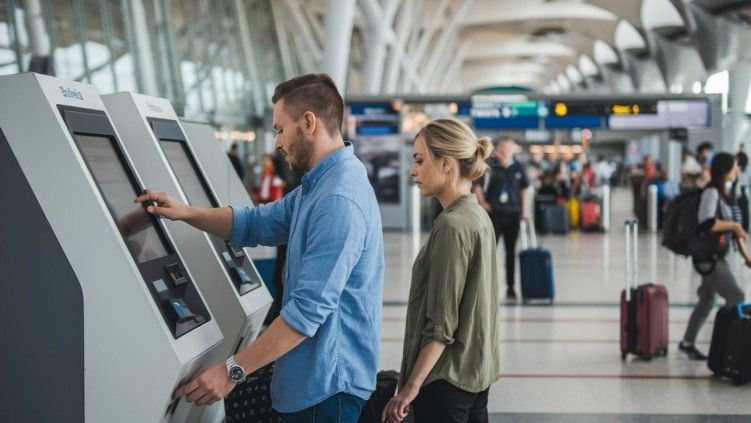
The Invisible Pilot: Global Airports Turn to AI to Solve the 10 Billion Passenger Crisis
Jan 29, 2026 |
👀 151 views |
💬 0 comments
As global air passenger traffic is officially forecast to hit a staggering 10.2 billion this year, the aviation industry has reached a breaking point. To prevent total gridlock, airports are no longer just "using" AI—they are rebuilding their entire operational foundations around it. From "Agentic AI" that manages gate swaps to biometrics that turn your face into a permanent passport, 2026 has become the year the "Smart Airport" moved from pilot phase to global standard.1. Predictive Operations: Moving from Reactive to ProactiveThe traditional airport model was reactive—if a queue formed at security, more staff were called. In 2026, AI is solving the problem before it exists.The "Co-Pilot" at APOC: At airports like Toronto Pearson (YYZ) and Abu Dhabi, the Airport Operations Center (APOC) now utilizes an AI "Co-Pilot." This system simulates thousands of "what-if" scenarios in real-time, proactively recommending gate swaps and ground turnaround adjustments to prevent ripple-effect delays.Zensors PAX AI: Deployed at major hubs, this matrix of AI-powered cameras predicts wait times with $98\%$ accuracy. Passengers can see real-time "time-to-gate" estimates on their mobile apps, allowing the airport to dynamically reroute foot traffic to underutilized security lanes.2. The End of the Passport? Biometrics and "One ID"The most visible change for travelers in 2026 is the rapid disappearance of physical documents.Walk-Through Immigration: Singapore Changi and Dubai International have pioneered "frictionless" zones where passengers walk through a short corridor without stopping. AI-powered facial recognition and iris scanning verify identity at walking speed, reducing immigration time to under 10 seconds.Manila’s $3B Modernization: Earlier this month, Manila International Airport announced it is transforming its border experience with Amadeus biometrics, allowing the world’s most congested terminals to process double the passenger volume without expanding their physical footprint.IATA’s One ID: The industry is finally standardizing the "Digital Travel Credential" (DTC), which allows a single biometric token to carry a passenger across multiple borders and airlines, ending the "check-in, check-again" cycle.3. "Agentic" Baggage and MaintenanceBehind the scenes, AI is solving the industry's costliest headache: lost luggage and equipment failure.Autonomous Baggage Agents: New "Agentic AI" systems, highlighted at the Airport AI Exchange this month, coordinate independent robotic units that sort and transfer bags. These agents can autonomously prioritize "hot transfers" for passengers on tight connections.SITA & Apple Integration: SITA has successfully integrated Apple’s "Find My" technology into airline baggage systems, allowing ground crews and passengers to track luggage with centimeter-level precision.Predictive Maintenance: AI sensors now monitor everything from the tension in baggage carousels to the hydraulic health of jet bridges, predicting failures days before they happen to ensure "zero-downtime" operations.
4. The "Sovereign AI" Security Shift
As airports become hyper-connected, the focus has shifted to Edge AI. To comply with strict privacy laws, new security cameras (like those trialed by Biotime Technology) process data locally on the device rather than in the cloud. This allows for instant "anomaly detection"—identifying unattended bags or erratic behavior—without ever storing a passenger’s identifiable image, solving the "privacy vs. security" debate.
Executive Insight: "We are moving into a pivotal decade where data and autonomy will transform the entire travel experience," said a spokesperson for SITA during the AI in Aviation summit. "In 2026, technology is no longer an optional enhancement; it is the only way we can scale to meet the demand of 10 billion people."
🧠 Related Posts
💬 Leave a Comment