The Great Unfreezing: Agentic AI Hailed as Game Changer for Federal Modernization
Jan 8, 2026 |
👀 140 views |
💬 0 comments
The era of federal agencies relying on simple chatbots to summarize emails is officially over. On Thursday, Broadcom and VMware released a pivotal report identifying "Agentic AI" as the primary driver for Federal IT modernization in 2026, signaling a massive shift in how the government intends to solve its historic efficiency crisis.
This announcement coincides with a flurry of activity across the Beltway this week, where tech giants including Google Public Sector, ServiceNow, and Salesforce have all aligned around a single message: 2026 is the year AI stops "chatting" and starts "doing."
From "Chatting" to "Acting"
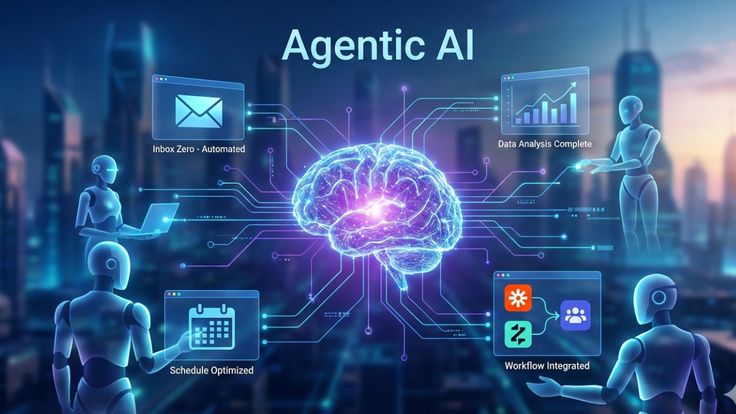
The report highlights a critical distinction that is redefining federal contracts: the move from Generative AI (which creates content) to Agentic AI (which executes workflows).
The "Doer" Difference: Unlike ChatGPT, which might write a policy memo, an "Agentic" system can actively log into a procurement system, verify a vendor's tax status, draft the contract, and route it for approval—all without human intervention until the final signature.
Private Cloud Power: Broadcom's specific breakthrough involves deploying these agents within Private Cloud environments. This addresses the government's primary fear—security. By keeping these autonomous agents entirely within agency firewalls (on-premise or private cloud), agencies like the DoD and IRS can finally automate classified or sensitive workflows that were previously off-limits to public AI models.
The "OneGov" Ripple Effect
This technological pivot is already reshaping major government deals.
ServiceNow's "OneGov" Deal: The trend is underpinned by the massive "OneGov" agreement between the GSA and ServiceNow (finalized late 2025), which aims to standardize these AI agents across agencies. The goal is to have an "AI Control Tower" where a single dashboard manages thousands of autonomous agents handling IT tickets, HR onboarding, and benefits processing.
Google's "Mission District": In a demonstration of this new speed, Google Public Sector recently revealed that government developers built over 300 functional AI agents in a single day at a recent summit. This "rapid prototyping" model is replacing the years-long software acquisition cycles of the past.
Why Now? The Efficiency Mandate
The rush to "Agentic" tech is driven by necessity rather than novelty. With federal budgets tightening and workforce shortages looming, agencies are under pressure to do more with less.
Workforce Augmentation: The report suggests these agents are not replacing federal workers but "unfreezing" them from administrative paralysis. By offloading the "drudgery" of data entry and compliance checking to agents, human civil servants are freed to focus on high-value mission work.
Security by Design: The new wave of agents comes with "guardrails" built-in. Unlike early AI that "hallucinated," these agentic systems operate on strict logic paths—if step A doesn't match the regulation, step B simply refuses to execute.
"We are moving from the 'experimentation' phase to the 'operational' phase," said a federal CTO at a related industry briefing. "2025 was about asking AI questions. 2026 is about giving AI a job description."
🧠 Related Posts
💬 Leave a Comment