Teacherless Classrooms: London School Claims AI Instruction Beats Human Teachers
Dec 19, 2025 |
👀 105 views |
💬 0 comments
The results are in for one of the world's most controversial educational experiments, and according to David Game College, the machines have won. The private boarding school, which launched the UK's first "teacherless" GCSE course earlier this year, is now reporting that its AI-taught students have significantly outperformed national averages in their 2025 examinations.
The findings are likely to fan the flames of a global debate: can an algorithm replace the intuition of a human educator?
The Numbers: AI vs. National Average
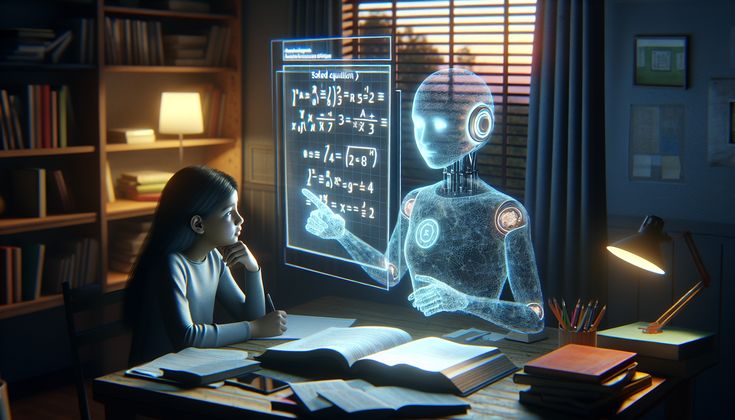
The pilot program, known as the Sabrewing course, replaced traditional subject teachers with adaptive AI platforms and Virtual Reality (VR) headsets. Students learned at their own pace, guided only by "learning coaches" who managed behavior but offered no academic instruction.
According to data released by the college, the AI-first approach delivered striking results:
Top Grades (9-7/A*-A): 35% of AI-taught students achieved these top marks, compared to the UK national average of 21.9%.
Pass Rate (9-4/A*-C): 80% of the AI cohort secured a passing grade or better, well above the national average of 67.4%.
"There are many excellent teachers out there, but we are all fallible," said John Dalton, co-principal of David Game College. "The AI does not get tired, it does not get frustrated, and it identifies knowledge gaps with a forensic precision that a human teacher in a classroom of 30 simply cannot match."
Inside the "Sabrewing" Classroom
For the 20 students enrolled in the course—at a cost of roughly £27,000 ($34,000) per year—the school day looks radically different. There are no lectures and no "chalk and talk."
Instead, students log into personalized dashboards that constantly assess their understanding. If a student excels in chemistry but struggles in math, the AI automatically rebalances their schedule to focus on the weaker subject. It essentially acts as a hyper-efficient private tutor, deferring topics the student has mastered to the end of the term for revision while drilling down on immediate problem areas.
"A teacher doesn't really know your flaws because he has so many students," said Joseph, a GCSE student in the pilot. "The AI figures out exactly what you don't know and makes you fix it."
The "Soulless" Future?
Despite the academic success, the model faces fierce criticism from educational traditionalists. Opponents argue that school is about more than just data ingestion; it is about social development, debate, and the spark of inspiration that comes from human mentorship.
"The problem with the computer screen is that it is inert," warned Chris McGovern, a former head teacher and policy advisor. "You are dehumanizing the process of learning. It is a soulless, bleak future if education follows only the AI path."
David Game College counters that their model actually humanizes the day. By offloading the "drudgery" of grading and lesson planning to AI, the human "coaches" in the room are free to focus entirely on the students' mental health, soft skills, and life coaching—areas often neglected by overworked teachers trying to get through a syllabus.
🧠 Related Posts
💬 Leave a Comment