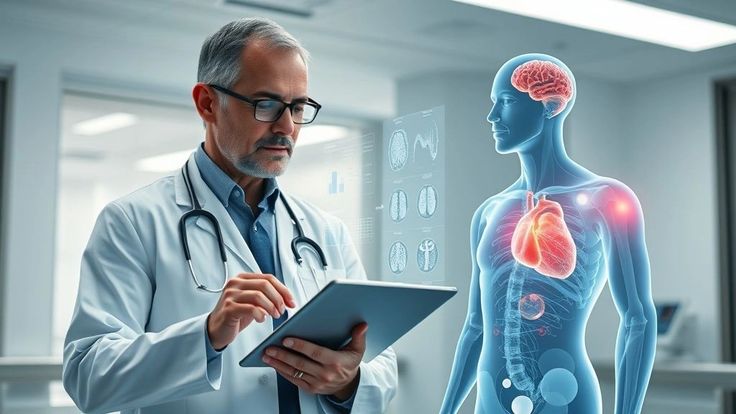
Singapores Transfer Learning Breakthrough: AI Diagnostics for the Worlds Underserved
Jan 31, 2026 |
👀 157 views |
💬 0 comments
In a major push to democratize elite medical technology, Singaporean researchers have unveiled a new strategy to deploy advanced AI diagnostics in hospitals that lack the massive datasets and high-end infrastructure of the West. Led by Duke-NUS Medical School, the initiative demonstrates how "transfer learning" can bridge the diagnostic gap in resource-limited settings across Southeast Asia and Africa.
The move marks a shift in Singapore’s National AI Strategy 2.0, moving from internal optimization to becoming a global "tech-provider" for universal health coverage.
1. The "Transfer Learning" Milestone
The centerpiece of this announcement is a study published in npj Digital Medicine by researchers from the Duke-NUS Centre for Biomedical Data Science. They successfully solved one of the hardest problems in medical AI: the "data scarcity" trap.
The Problem: Most AI models are trained on massive datasets from wealthy nations (like Japan or the US). When moved to lower-resource settings (like rural clinics in Vietnam), these models often fail because the local data "looks" different.
The Solution: Instead of building a new model from scratch, the team used transfer learning to adapt a Japanese brain-recovery model (trained on 46,000 patients) for use in Vietnam.
The Result: The adapted model achieved 80% accuracy in predicting neurological recovery after cardiac arrest, compared to just 46% for the original un-adapted version. This allows doctors in resource-strapped clinics to make life-saving decisions without needing their own supercomputers.
2. LLMs for Global Health: Beyond the Clinic
In a parallel study published in Nature Medicine, Duke-NUS and University College London (UCL) explored the use of Large Language Models (LLMs) to act as "specialist proxies" in regions with severe doctor shortages.
Malaria Detection via Smartphone: In Sierra Leone, researchers are testing AI-powered smartphone apps that community health workers use to detect malaria from simple blood smears. This replaces the need for expensive, high-powered microscopes and expert pathologists.
Maternal Health Chatbots: In South Africa, LLMs are being deployed to provide culturally nuanced, multilingual pregnancy support, acting as a "digital midwife" for mothers who may live hours away from the nearest hospital.
3. "Sovereign AI" for Southeast Asia
Back at home, Singapore is leveraging its National Multimodal LLM Programme (NMLP) to ensure AI doesn't just speak English, but understands the "Singlish" and local dialects of the region's elderly.
SEA-LION & MERaLiON: These locally developed models are being integrated into community care to bridge the language gap between elderly patients and healthcare staff.
SoundKeepers Project: Launched in late 2025, this tool uses voice biomarkers to detect early signs of depression in seniors during casual conversation, allowing for mental health "triage" in community centers before a clinical crisis occurs.
4. The POLARIS-GM Governance Initiative
Recognizing that AI in low-resource settings carries unique risks (such as "model hallucinations" leading to wrong treatments), Duke-NUS has proposed the creation of POLARIS-GM (Partnership for Oversight, Leadership, and Accountability in Regulating Intelligent Systems).
This international consortium aims to create "safety guardrails" specifically for developing nations, ensuring that as AI scales, it doesn't leave the most vulnerable populations behind due to biased algorithms or poor oversight.
Perspective: "We are proving that AI models do not need to be rebuilt from scratch for every village or clinic," said Associate Professor Liu Nan, Director of the Duke-NUS AI + Medical Sciences Initiative. "By adapting existing tools safely, we can lower costs and extend the benefits of the AI revolution to those who need it most."
🧠 Related Posts
💬 Leave a Comment