Lightbulbs for the Cell: AI Breakthrough Accelerates Antibody Probes for Real-Time Cellular Imaging
Jan 17, 2026 |
👀 133 views |
💬 0 comments
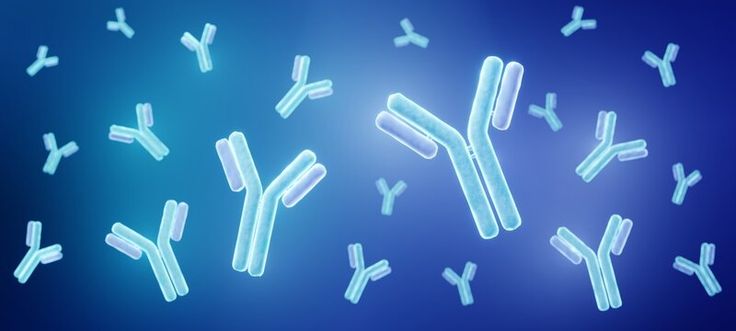
In a major leap for cell biology, researchers at Colorado State University (CSU) have successfully utilized artificial intelligence to solve a decades-old problem: making antibodies "survive" inside living cells. The study, published in Science Advances on January 13, 2026, details how AI tools can now redesign antibodies into stable, glowing "probes" that act as lightbulbs to track chemical changes and genetic errors in real-time.
The breakthrough effectively transforms the study of diseases like cancer from a series of "frozen snapshots" into a continuous, high-definition "live stream" of cellular behavior.
The Challenge: The "Intrabody" Survival Problem
Antibodies are naturally designed by the immune system to work in the bloodstream. When scientists try to inject them into the harsh, crowded environment inside a cell to track activity, the antibodies usually "misfold" or fall apart, becoming useless.
The Manual Grind: Traditionally, identifying an antibody stable enough to work inside a cell (an "intrabody") took years of trial-and-error screening.
The AI Solution: The CSU team, led by Professor Chris Snow, used a suite of AI tools to bypass this process. By utilizing Google DeepMind’s AlphaFold2 to predict structures and ProteinMPNN to redesign the protein "framework," they were able to engineer stability into the antibodies without losing their ability to bind to targets.
Key Results: Speed and Success Rates
The impact of the AI-driven approach was immediate and measurable:
Rapid Iteration: The team created and tested 19 new antibody-based probes in a fraction of the time required by traditional methods.
The "Refinement" Factor: Remarkably, 18 of the 19 successful sequences were versions that had previously failed in the lab. The AI was able to identify the specific structural weaknesses and "fix" them so they could remain stable inside the cell.
Thermal Toughness: The AI-designed probes remained stable even at high temperatures, making them easier to transport and potentially useful for diagnostic work in various climates.
Applications: Tracking the "Errors" of Life
These probes are designed to bind to specific markers, such as histone modifications, which control whether genes are turned "on" or "off."
Cancer Research: Scientists can now see if a tumor-suppressor gene has been erroneously deactivated in a single cell or across a whole tissue pattern.
Viral Tracking: In collaboration with the Department of Microbiology, the researchers are re-engineering virus-specific antibodies to track how infections like West Nile replicate inside a cell over time.
Continuous Imaging: Because the probes are stable, they allow for "continuous imaging," meaning researchers can watch a cell's life cycle unfold without the probe breaking down midway through the experiment.
The AI Toolkit
The pipeline, which has been made open-source for the global research community, integrates:
AlphaFold2: To model the initial 3D structure of the antibody.
ProteinMPNN: To "re-skin" the antibody’s framework for solubility and heat resistance.
Live-Cell Screening: A final validation step to ensure the probe still binds to its target while glowing under a microscope.
"This is moving us from a process of chance to one of design," said a lead researcher on the project. "We aren't just looking for a needle in a haystack anymore; we're building the needle ourselves."
🧠 Related Posts
💬 Leave a Comment