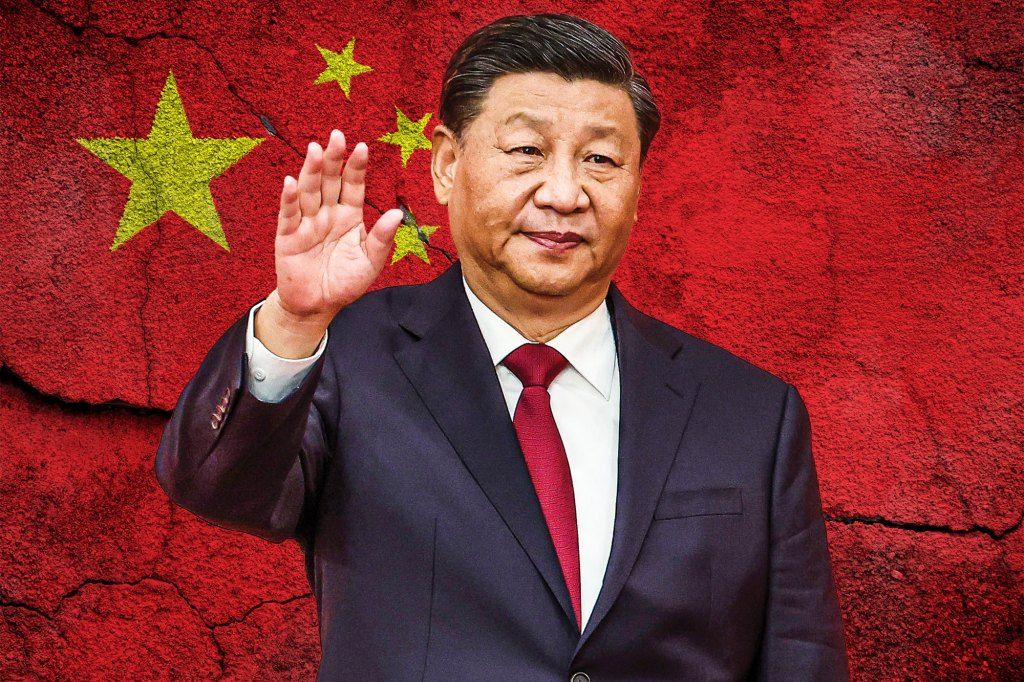
China Is Closing the AI Gap with Terrifying Efficiency, Researchers Warn
Jan 10, 2026 |
👀 108 views |
💬 0 comments
The comfortable lead that the United States has enjoyed in the artificial intelligence race is evaporating faster than predicted. According to new reports released this week by researchers at Stanford University and analysis from industry insiders, China is rapidly closing in on US dominance, driven by a paradox: US sanctions designed to cripple them have instead forced them to become leaner, faster, and more efficient.
The findings, which come on the heels of the shock release of the DeepSeek model, suggest that the "chip curtain" intended to starve China of computing power has inadvertently birthed a new generation of hyper-efficient AI architectures that do more with less.
The "DeepSeek" Shockwave
The primary catalyst for this reassessment is the rise of DeepSeek, a Chinese AI startup that recently released a model (DeepSeek-V3) capable of rivaling OpenAI’s GPT-4 and o1 models.
The Efficiency Breakthrough: While US companies burn billions on massive clusters of Nvidia H100 chips, DeepSeek reportedly trained its world-class model on a "shoestring budget" using older or restricted hardware.
The Innovation: Researchers point to new training methods, such as "Manifold-Constrained Hyper-Connections" (mHC), which allow models to scale up without the exponential explosion in computing power usually required. "They aren't just copying us anymore," said one Silicon Valley venture capitalist. "They are architecting around the blockade."
The Sanctions Paradox
For two years, Washington has relied on strict export controls to keep advanced GPUs (like Nvidia’s H100 and Blackwell series) out of Chinese hands. However, the Stanford HAI 2025 AI Index Report notes that this scarcity has forced a Darwinian evolution in Chinese labs.
Software Over Hardware: Unable to "brute force" progress with raw power, Chinese researchers have focused on algorithmic efficiency. As a result, when they do get access to compute, their models run significantly lighter and faster than bloated US equivalents.
Domestic Resilience: Tech giants like Alibaba (with its Qwen model) and Huawei are successfully pivoting to domestic chips like the Ascend 910C, creating a self-sufficient ecosystem that is "good enough" for frontier research.
Closing the Gap by the Numbers
The data paints a sobering picture for US policymakers assuming a permanent lead.
The "7-Month" Lag: Analysis suggests the time lag between a top-tier US release and a Chinese equivalent has shrunk to approximately seven months. In 2023, that gap was estimated to be years.
Open Source Dominance: China has effectively captured the "open weights" market. While OpenAI and Google keep their models closed, Alibaba’s Qwen has become the de facto standard for open-source developers globally, with millions of downloads—even by Western companies looking for cost-effective alternatives to Llama.
Research Volume: China continues to lead the world in the sheer volume of AI patents and research papers, with the quality of these publications (measured by citations) rising sharply to match US output.
The Expert View
"The assumption that you can stop an idea with a trade barrier is failing," said Dr. Li Wei, an AI policy researcher. "The constraints didn't kill the industry; they just stripped away the inefficiency. Now you have a competitor that knows how to survive on a diet while you are used to a feast."
🧠 Related Posts
💬 Leave a Comment