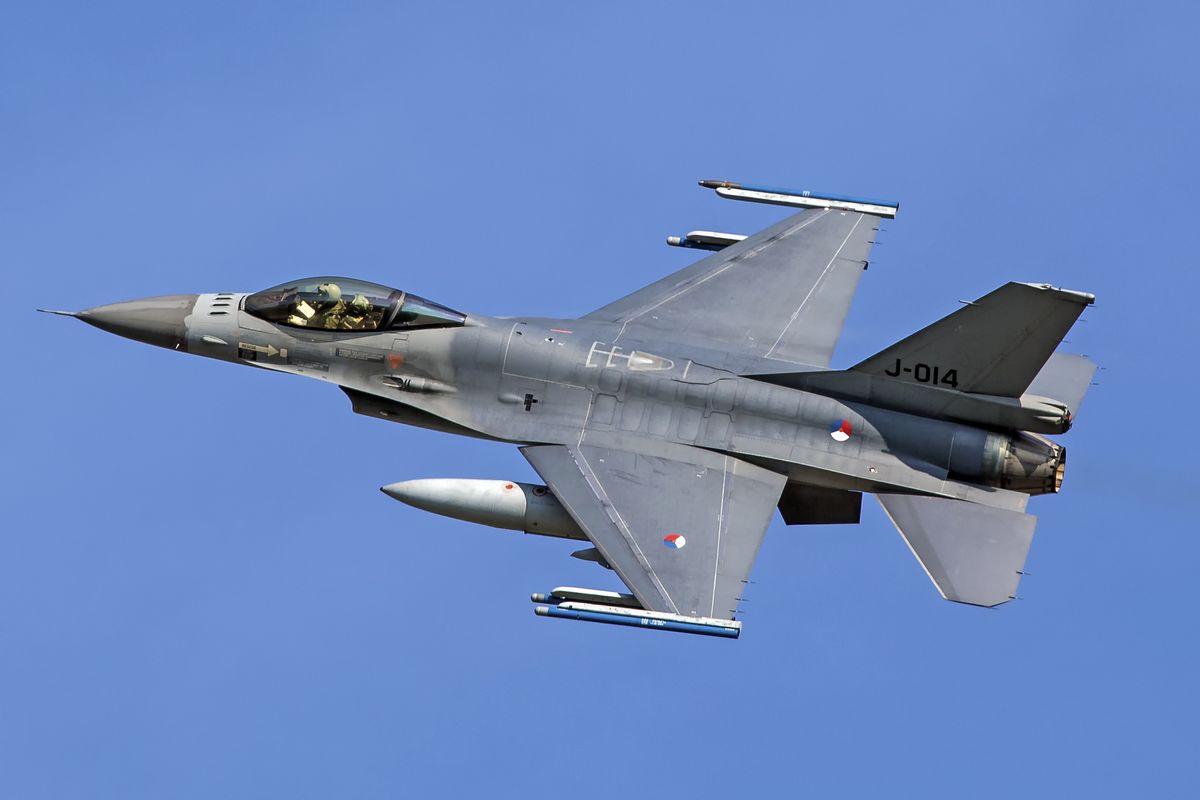
Beyond the Radar Lock: AI Takes the Trigger in New Era of Aerial Warfare
Dec 27, 2025 |
👀 150 views |
💬 0 comments
The age of the "Top Gun" pilot relying solely on instinct and reflexes is ending. As 2025 closes, a series of breakthrough flight tests and classified simulations have confirmed that artificial intelligence is no longer just flying fighter jets—it is fundamentally rewriting the playbook on how missiles are targeted, guided, and fired.
From the U.S. Air Force’s new robotic "wingmen" to Chinese algorithms inventing physics-defying kill shots, AI is compressing the "kill chain"—the time between spotting a target and destroying it—from minutes to milliseconds.
The Rise of the "YFQ" Fleet
The most tangible shift occurred late this year with the U.S. Air Force’s rapid progression of the Collaborative Combat Aircraft (CCA) program. In a significant move toward autonomous warfare, the Pentagon officially designated its new AI-piloted prototypes: the General Atomics YFQ-42A and the Anduril YFQ-44A.
Flight Milestones: Both aircraft completed critical flight tests in late 2025 (General Atomics in August, Anduril in October). Unlike traditional drones flown remotely by humans with joysticks, these jets use onboard AI to fly themselves.
The Mission: These "loyal wingmen" are designed to fly alongside crewed F-35s and the future NGAD fighter. Their role is to carry extra missiles and, crucially, use AI to identify targets and suggest firing solutions that the human pilot might miss in the chaos of battle.
"The AI doesn't panic, it doesn't blink, and it can track twenty vectors simultaneously," noted a defense analyst at the Potomac Institute. "It turns a single human pilot into a squad leader."
Algorithms Inventing Tactics
While the U.S. focuses on hardware integration, reports from China highlight how AI is inventing entirely new combat tactics. In a widely discussed 2025 simulation, Chinese researchers reported that an AI pilot engaged in a Mach 11 hypersonic dogfight executed a maneuver no human would attempt.
The "Over-the-Shoulder" Shot: Instead of turning to face the enemy, the AI flew away to a specific distance and fired a missile backward ("over the shoulder") at a calculated trajectory that maximized the kill probability.
The Implication: AI guidance systems are beginning to exploit physics in ways that defy traditional "turn-and-burn" dogfighting doctrine, prioritizing mathematical probability over conventional maneuvering.
Closing the "Kill Chain"
The real revolution, however, is not in the flying but in the thinking. New "Edge AI" systems are being deployed to handle the overwhelming data of modern war.
Shield AI Tests: In September 2025, the U.S. Navy successfully demonstrated AI autonomy on BQM-177A aerial targets. The "Hivemind" pilot software allowed the aircraft to execute dynamic, threat-representative maneuvers without remote input.
Project Maven: During the "Scarlet Dragon" exercises in December 2025, the U.S. military used the Maven Smart System to relay targeting data directly to weapon launchers (like HIMARS), bypassing layers of human analysis.
The "Human in the Loop"
Despite the advances, Western military doctrine remains firm on one rule: a human must authorize lethal force. The current CCA prototypes operate on a "semi-autonomous" basis—the AI flies the jet and locks the radar, but a human thumb must still press the final button.
However, with reaction times in hypersonic combat dropping to split seconds, experts warn that the pressure to switch to fully autonomous "fire-and-forget" modes will eventually become irresistible.
🧠 Related Posts
💬 Leave a Comment