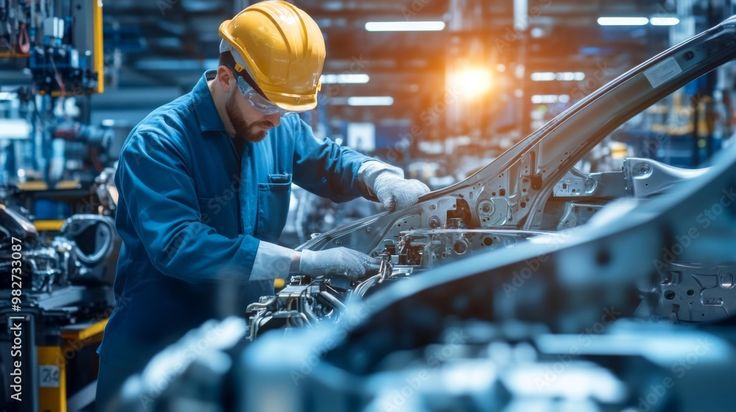
AI Transforms Automotive Manufacturing from Reactive Fixes to Predictive Intelligence
Dec 15, 2025 |
👀 129 views |
💬 0 comments
The days of "run-to-failure" in the automotive industry are officially over. A new wave of "Agentic AI" is fundamentally reshaping how cars are built, moving the sector from reactive repairs to a new era of predictive intelligence.
According to a breaking industry report released today, this shift is delivering massive efficiency gains. Leading the charge is BMW, which has reportedly achieved a stunning 35-50% reduction in unscheduled downtime at key plants by deploying computer vision and AI-driven predictive maintenance systems.
The Shift to "Agentic" AI
While automakers have used basic sensors for years, the new standard for 2025 is "Agentic AI." Unlike older systems that simply flagged a warning light for a human to check, these advanced AI agents are capable of:
Diagnosing the root cause of a vibration or temperature spike in real-time.
Ordering replacement parts automatically before a machine even fails.
Scheduling its own repairs during planned breaks to avoid disrupting the assembly line.
"We are moving from a 'check engine' light for factories to a factory that heals itself," said Rajavel Sekaran, a manufacturing analyst. "The system doesn't just tell you there is a problem; it hands you the solution."
Big Players, Big Savings
The financial stakes are enormous. Unplanned downtime costs the auto industry an estimated $1.3 million per hour. By virtually eliminating these stops, companies are unlocking billions in lost productivity.
Toyota: Leveraging a hybrid cloud strategy with Google Cloud and AWS, Toyota has democratized AI development on its shop floors. Its "Smarter Plant Solution" allows workers to build simple ML models that detect defects in real-time, saving thousands of hours of manual inspection work annually.
Market Boom: The global market for automotive predictive analytics is exploding, now projected to reach $33.5 billion by 2034.
The "Zero-Downtime" Future
This transformation is also critical for the electric vehicle (EV) transition. As manufacturers race to retool factories for EV platforms, the complexity of assembly lines has skyrocketed. AI is proving to be the only way to manage the precision required for battery assembly and high-voltage systems.
"The goal is the 'silent factory,'" noted one operations director. "A place where the only time the line stops is when we tell it to stop."
... Modernizing predictive maintenance with Toyota ...
This video from Toyota and AWS provides a real-world look at how the automaker uses cloud-based sensor data to predict equipment failures before they happen.
🧠 Related Posts
💬 Leave a Comment